
Design reference: this page is not presented as a completed Benson Display client project. Use the layout and fixture ideas to describe your own requirements; specifications and project scope need separate confirmation.
Revolutionizing Museum Experiences: How Cutting-Edge Display Glass Protects Artifacts and Engages Audiences
Title: “Revolutionizing Museum Experiences: How Cutting-Edge Display Glass Protects Artifacts and Engages Audiences”
Introduction: The New Era of Museum Displays
Museums are no longer just repositories of history—they are dynamic spaces where technology and design converge to protect priceless artifacts while captivating visitors. At the heart of this transformation lies advanced display glass, engineered to address decades-old challenges of fragility, reflection, and environmental control. This article explores how innovations in glass technology are reshaping museum exhibitions, ensuring both preservation and immersive storytelling.
The Problem with Traditional Display Cases
For centuries, museums relied on basic glass to showcase artifacts, prioritizing visibility over protection. However, these materials posed significant risks:
-
Fragility: Standard glass shattered easily, endangering artifacts and visitors.
-
Glare and Distortion: Reflective surfaces obscured exhibits, especially under bright lighting.
-
Environmental Damage: UV radiation and humidity fluctuations accelerated artifact decay.
Tempered glass, introduced later, improved durability but introduced new issues like spontaneous breakage and optical imperfections. These limitations highlighted the urgent need for smarter solutions.
Breakthroughs in Modern Display Glass
Today’s museums use specialized glass engineered for safety, clarity, and conservation. Three key innovations lead the way:
-
Ultra-Clear Laminated Glass
-
What It Solves: The greenish tint of traditional glass, caused by iron impurities, distorts artifact colors.
-
Innovation: By reducing iron content, ultra-clear glass achieves near-perfect transparency (99% light transmittance), ideal for vibrant textiles and paintings.
-
Durability: A resin interlayer bonds glass layers, preventing shattering and blocking 99% of UV rays.
-
-
Anti-Reflective Coated Glass
-
What It Solves: Harsh glare from lights or windows can obscure exhibits.
-
Innovation: Nano-coatings cut surface reflections to less than 1%, ensuring crisp visibility even in brightly lit halls.
-
Application: Perfect for gold relics, ceramics, and other light-sensitive objects.
-
-
Deformation-Resistant Glass
-
What It Solves: Large display panels often warp over time, breaking seals and exposing artifacts to humidity.
-
Innovation: Chemically strengthened through ion exchange, this glass resists bending, ensuring airtight displays for decades.
-
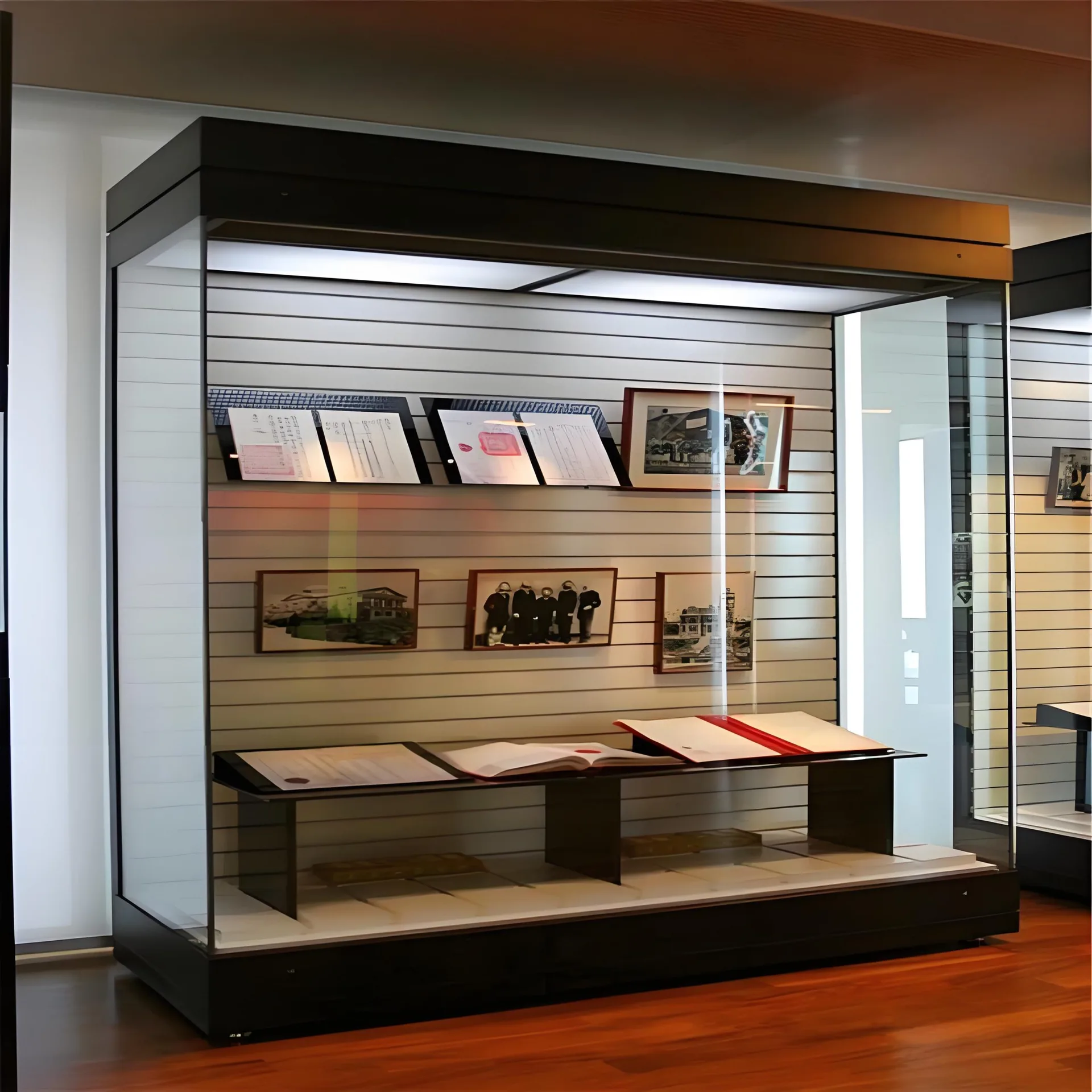
Use Case: Critical for towering wall displays or freestanding cases housing delicate scrolls or fabrics.
-
Beyond Protection: Enhancing the Visitor Experience
Modern display glass isn’t just about safety—it’s about creating connections:
-
True-to-Life Clarity: Ultra-clear glass lets visitors see artifacts as they were meant to be seen, without color distortion.
-
Immersive Storytelling: Anti-reflective surfaces eliminate distractions, pulling viewers into the narrative.
-
Architectural Flexibility: Slimmer, stronger panels enable bold designs, like floor-to-ceiling exhibits or curved displays.
Museums Leading the Charge
Institutions worldwide are adopting these technologies:
-
The Palace Museum, Beijing uses deformation-resistant glass to showcase massive bronze sculptures without visual obstructions.
-
Hunan Museum, China employs anti-reflective glass to reduce glare on ancient lacquerware, creating a meditative viewing environment.
-
Suzhou Museum West features freestanding displays with ultra-clear glass, offering 360° views of jade artifacts while blocking harmful UV light.
The Future: Smart Glass and Beyond
Next-generation displays are already on the horizon:
-
Adaptive Tinting: Glass that adjusts opacity based on ambient light, protecting sensitive items like manuscripts.
-
Integrated Sensors: Panels that monitor temperature, humidity, and even visitor engagement in real time.
-
Interactive Surfaces: Touch-responsive displays that provide context without physical contact.
Conclusion: Where Preservation Meets Innovation
The shift from simple glass cases to advanced display systems reflects museums’ evolving role as guardians of culture and hubs of education. By embracing technologies that marry protection with engagement, institutions can ensure artifacts survive for centuries while inspiring today’s audiences. As glass innovations continue to emerge, the line between preservation and presentation will blur—ushering in a new golden age for museums.
This structure balances technical detail with engaging storytelling, making it accessible to both industry professionals and general readers. Each section builds on the last, highlighting problems, solutions, and real-world impact.