
Design reference: this page is not presented as a completed Benson Display client project. Use the layout and fixture ideas to describe your own requirements; specifications and project scope need separate confirmation.
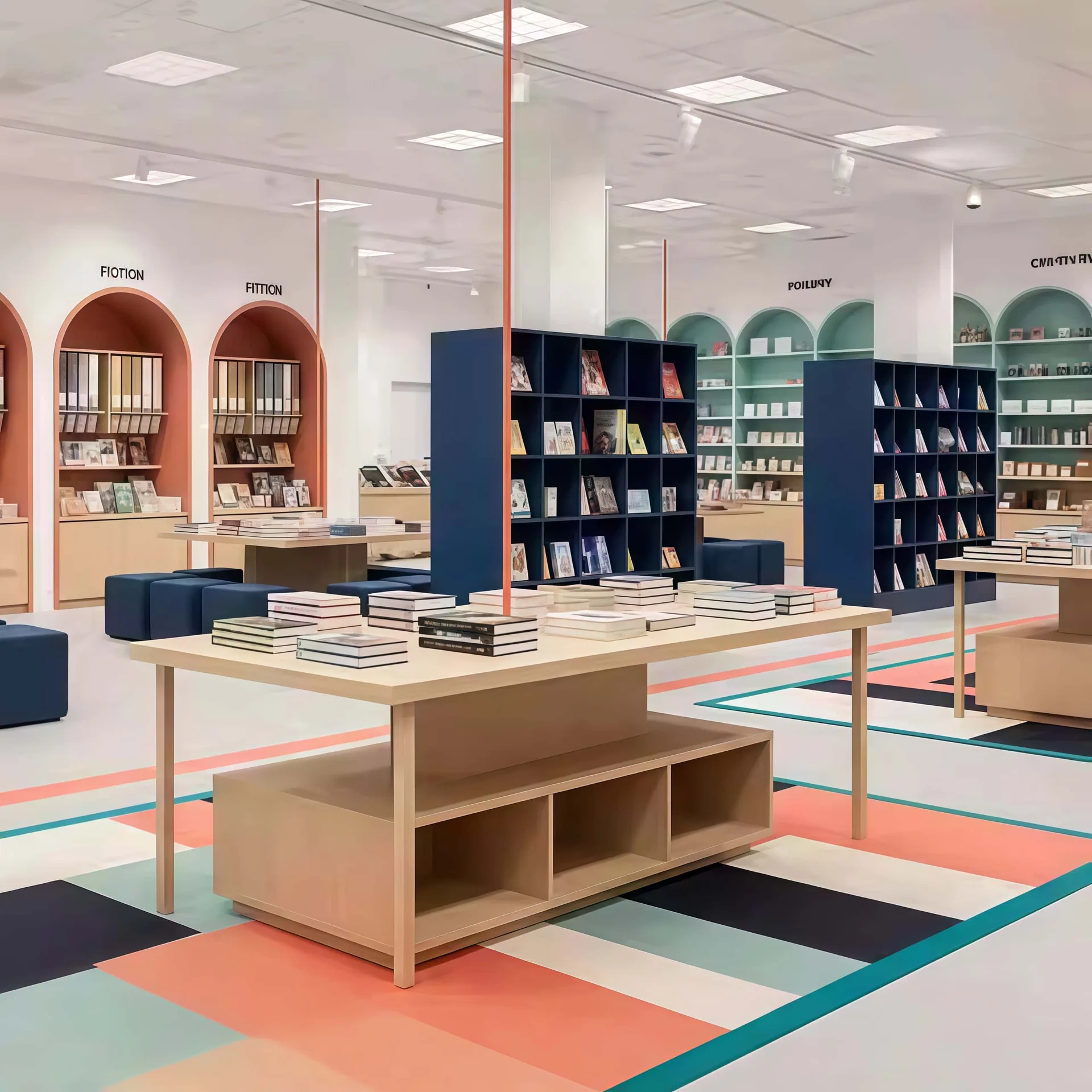
For anyone dreaming of opening a stationery shop, great store design does more than just look good—it shapes the customer experience, highlights your products, and makes the most of every square foot. Let’s explore the key design choices behind a successful modern stationery store that masters this balance.
1. The Layout Design
A clear, open layout removes frustration and turns shopping into discovery.
-
Themed Shopping Zones: Instead of mixing everything together, products are grouped into dedicated areas like “Art & Architecture” or “Culinary.” Customers find what they need quickly, whether it’s a sketchbook or a recipe planner.
-
Easy Movement: Wide aisles with curved floor patterns prevent crowding. Using lower tables and movable displays, instead of towering shelves, keeps the space feeling open and easy to navigate.
-
Spaces to Engage: Central tables with comfortable stools invite customers to test pens, browse journals, or ask questions. These spots naturally become hubs for featuring new products.
2. Atmosphere & Materials
The style is modern and clean, but far from cold, using materials and colors to create a welcoming vibe.
-
A Balanced Palette: Light oak wood and soft white walls create a calm, neutral backdrop. Strategic pops of color—like terracotta in an arch or teal on a display—add personality without distracting from the products.
-
Thoughtful Architectural Details: Rounded arches soften the space and frame displays like gallery exhibits. Textured slatted ceilings and subtle recessed lighting add depth while keeping the focus on the merchandise.
-
Human-Scale Furniture: Shelves and tables are kept at mid-height. This creates an intimate feel and ensures smaller items, like stickers and pens, don’t get lost.
3. Displays & Decor
Every fixture has a purpose: to organize, highlight, and adapt.
-
Built-In Feature Walls: Arched wall niches aren’t just decorative; their colorful backs make book spines pop, and their enclosed design keeps small items tidy. They’re perfect for showcasing curated collections.
-
Modular and Mobile Furniture:
-
Low Oak Tables: These workhorses display bestsellers while offering hidden storage below for extra stock, cutting down on clutter.
-
Rolling Display Racks: Mobile units with wire baskets hold bulkier items and can be easily rearranged for seasonal promotions or new arrivals.
-
-
Strategic Color Coding: A freestanding blue shelf for a specific category (like “Photo & Art”) immediately draws the eye. This system also helps staff restock efficiently.
-
Subtle Supporting Decor: A bit of hanging greenery adds life, and clean, simple signage provides direction. Ultimately, the design lets the stationery itself be the star.
Key Features for This Store Design:
This approach shows that effective design is about smart planning, not big budgets. Focus on:
-
Creating clear zones to guide customers logically.
-
Choosing multi-purpose, flexible fixtures that can change with your needs.
-
Building on a cohesive color story (neutral base + a few accents) to make your products shine