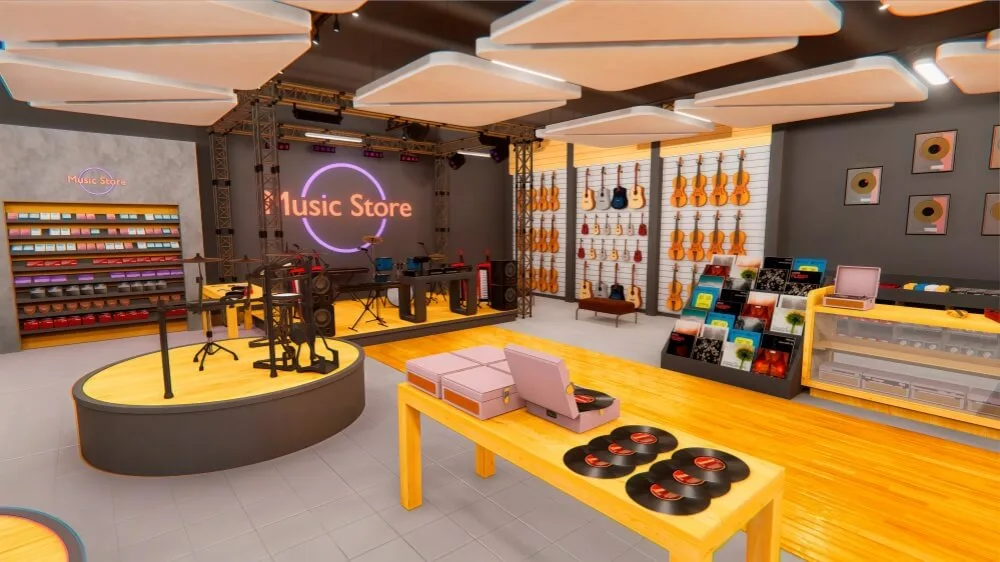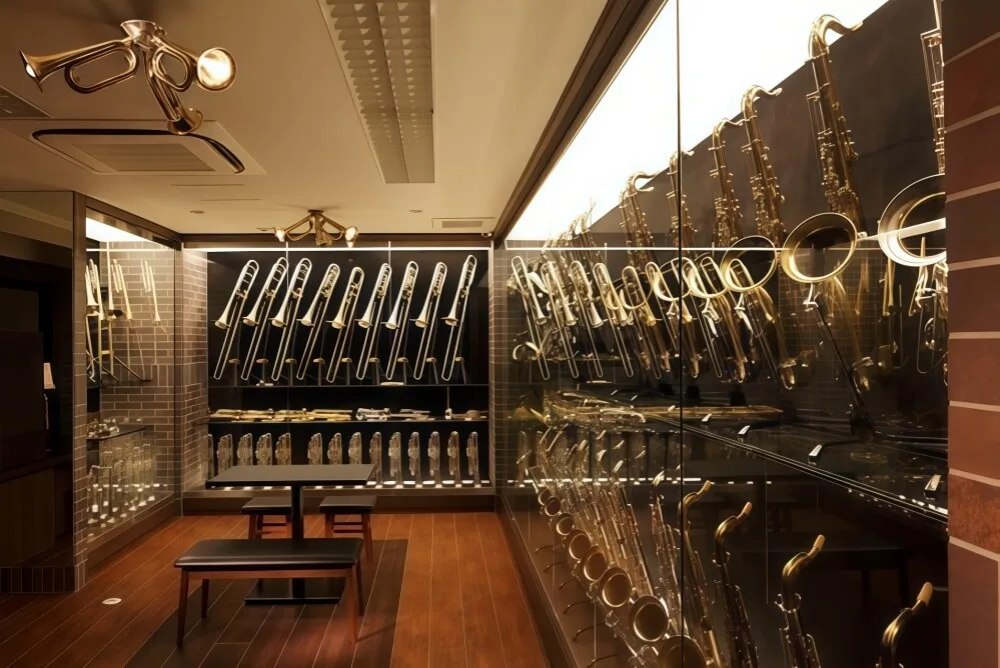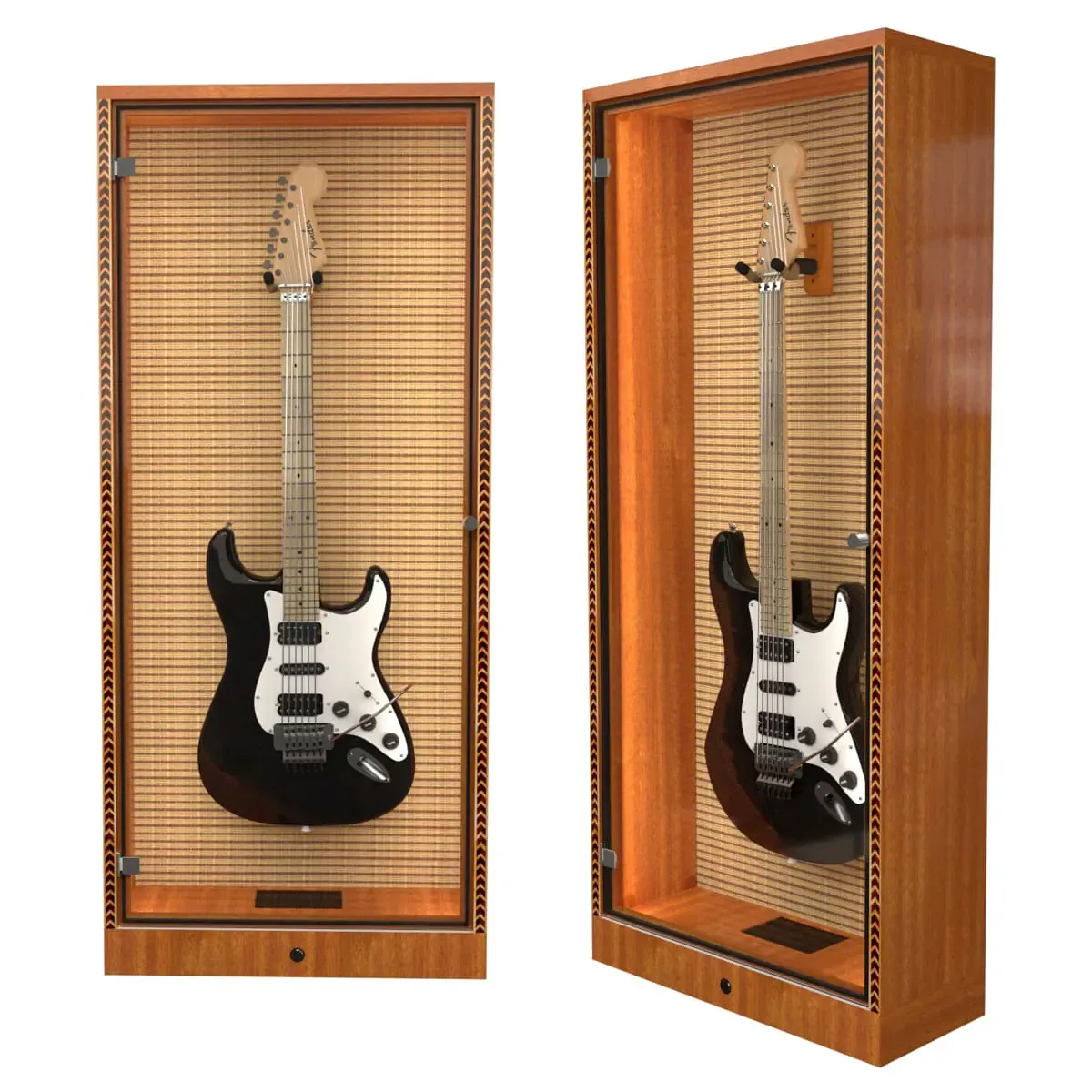
Design reference: this page is not presented as a completed Benson Display client project. Use the layout and fixture ideas to describe your own requirements; specifications and project scope need separate confirmation.
Electric Guitar Store Design With Slatwall Guitar Displays & Decoration Fixtures
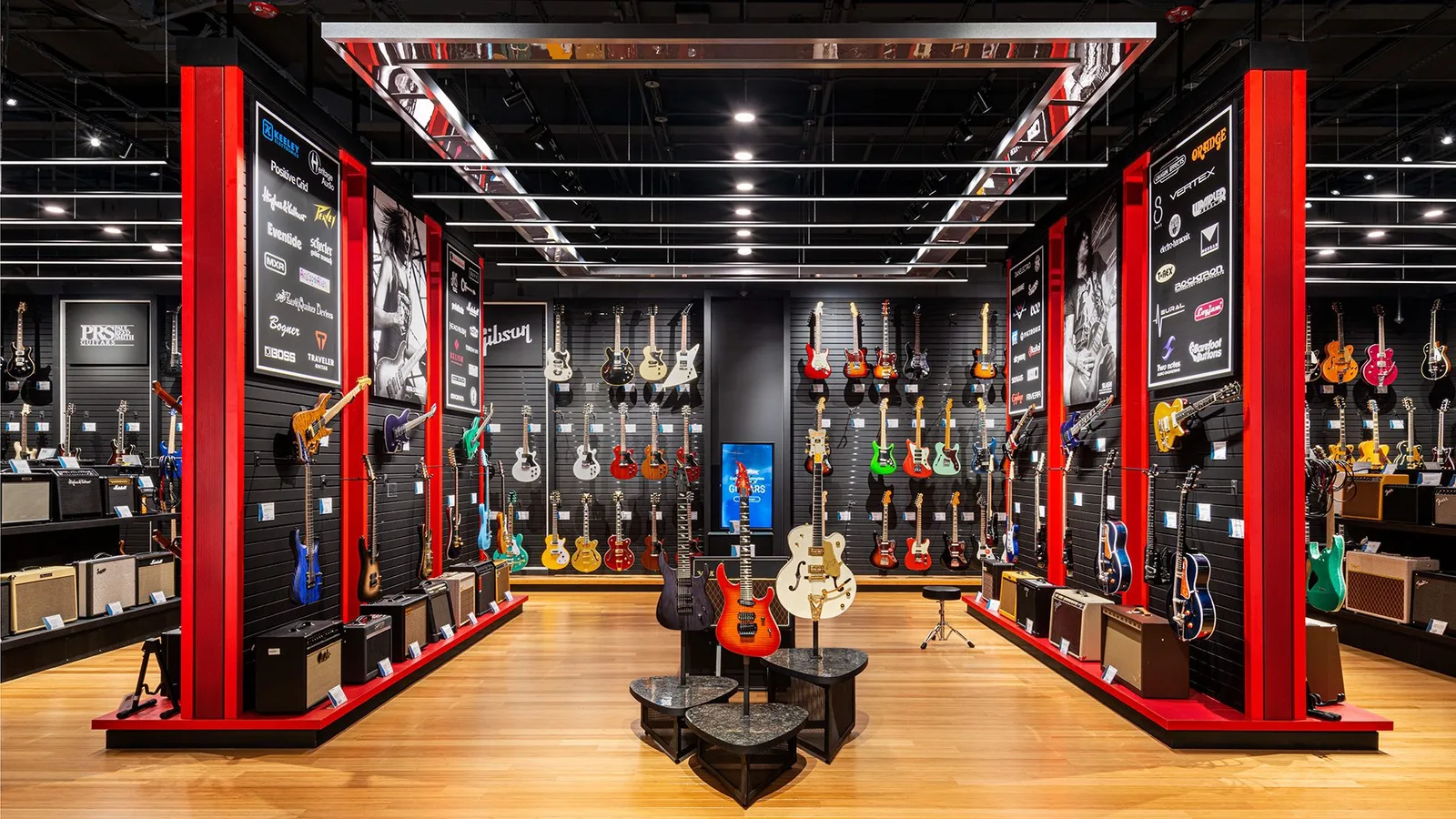
Electric Guitar Store Design
Layout
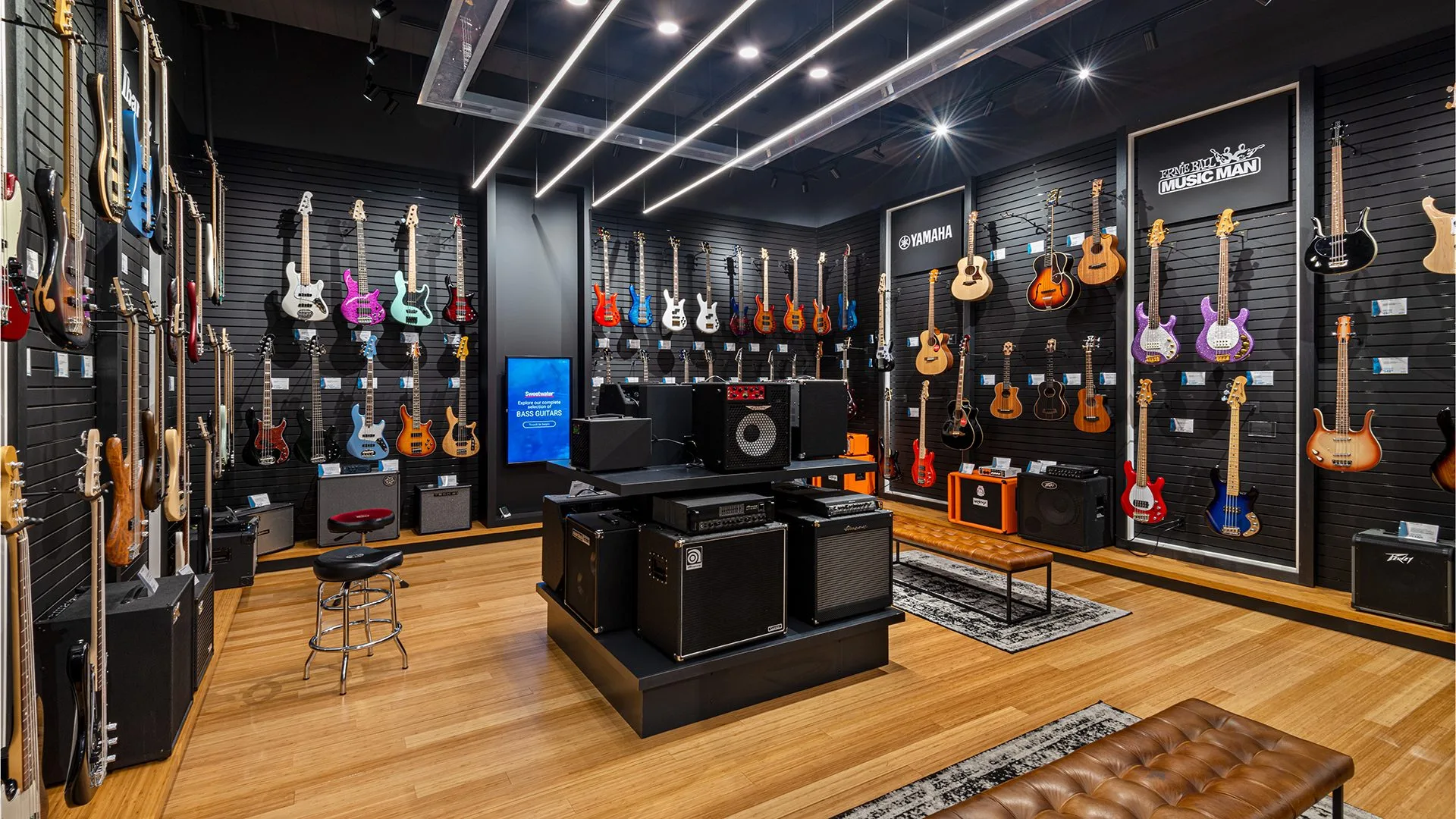
The store organizes space around customer movement. A central wall uses a metal grid system to display guitars by brand, creating a focused presentation. Below, tiered platforms show amplifier equipment together with the instruments.
The center of the store features open testing stations. These include stools and headphone amps for private practice. Dedicated areas for major brands are defined by simple pillars and digital screens showing product videos.
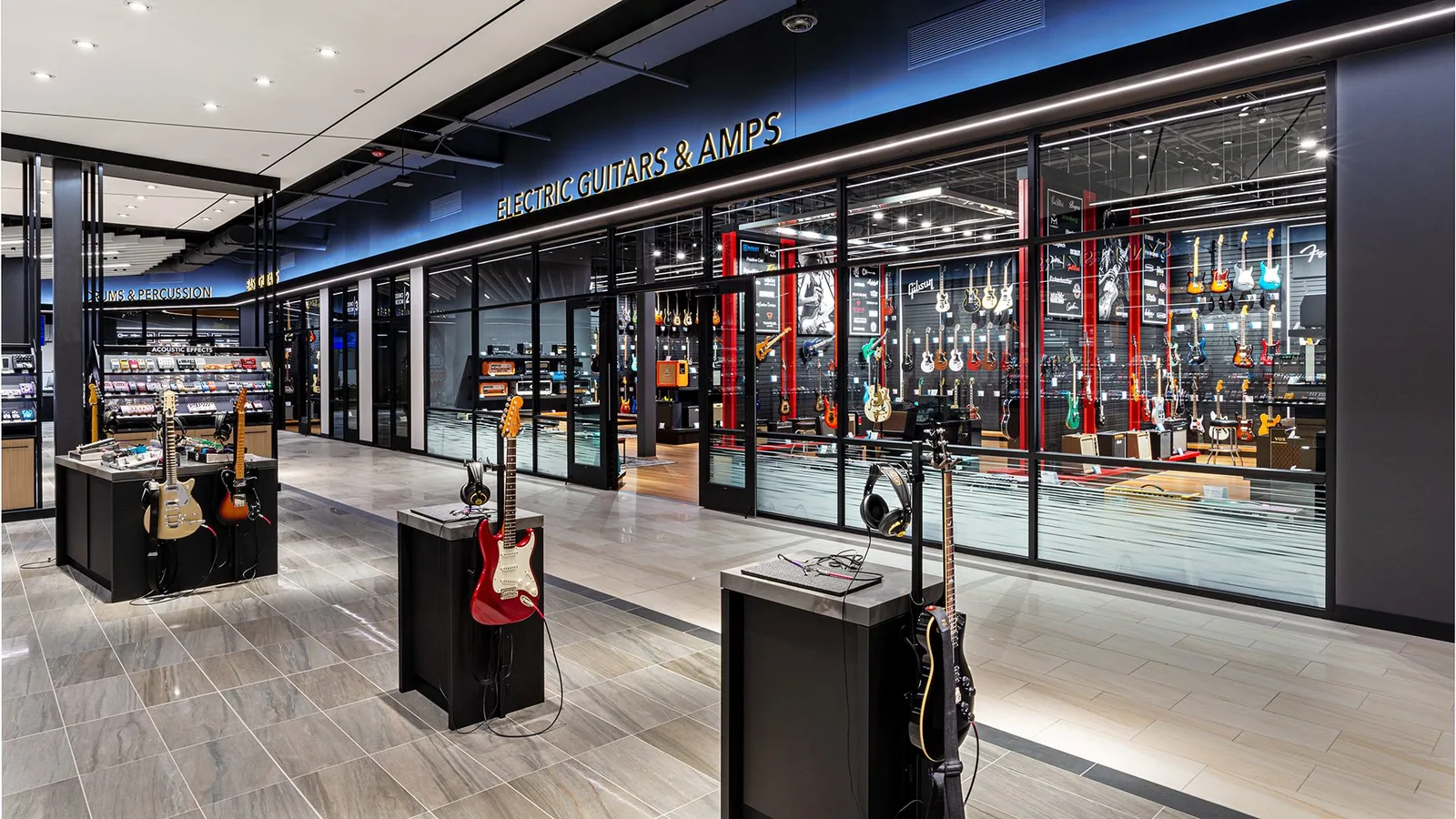
Materials and Color
The design uses a black, red, and natural wood color scheme. Black metal shelving and perforated panels form the primary material. Light wood flooring balances the industrial feel. Red elements provide visual accents throughout the space.
Lighting
Lighting focuses on the products. Individual spotlights highlight each guitar, making details and colors stand out. General ambient lighting ensures good visibility. Concealed LED strips around displays add depth and definition.
Display Systems
The displays are designed for function. Adjustable hooks accommodate different guitar shapes and sizes. Tiered stands organize amplifiers for easy comparison. Geometric display counters in the central area provide accessible space for testing multiple instruments.
This layout makes guitars the main feature. The design supports both viewing and direct interaction, turning the store into a functional environment for musicians.
Plan the Instrument Display Around the Collection
Start with the instruments rather than a standard cabinet size. Record the overall length, body depth and weight of each guitar, including any unusual headstock shape. Neck supports should suit the instruments being displayed, while contact materials need confirmation against the finish manufacturer’s care advice. Leave enough space between bodies for staff to remove one instrument without touching its neighbours. A wall of guitars should remain easy to browse even when the collection is fully stocked.
For an enclosed showcase, discuss door access, locks, cable routing and the position of lighting before approving the cabinet. The display should allow inspection of the instrument without direct glare across the glass. Humidity control is a separate equipment requirement: a reference image or illuminated cabinet does not establish climate performance. If preservation is part of the brief, specify the intended conditions, monitoring method and equipment in the quotation.
For an open guitar shop, connect wall displays with a supervised trial area. Allow for amplifier leads, customer seating and the route staff use when handing over instruments. Keep storage for cases and accessories close enough to support demonstrations without filling the browsing aisle. Bring photographs of the collection and a measured plan to the design discussion so that supports, access and merchandising can be considered together.
Prepare a Project-Specific Quotation
Use the reference as a starting point, then provide a measured floor plan or the available installation footprint. Mark entrances, existing fixtures, power points and any fixed obstructions. Include the products or equipment to be accommodated, the number of units required and the preferred colour or finish references. These details help turn a visual idea into a clear scope for drawings and pricing.
Ask the proposal to identify the agreed dimensions, materials, supplied components and installation responsibilities. Confirm packaging, the delivery destination and the required schedule separately. Existing reference descriptions do not establish a current price, production time, certified performance or an exact material specification for your order. Send your requirements to Benson Display to discuss the configuration and receive a quotation for the actual project.