
Blue stylish mobile phone kiosk design multi-functional cell phone repair display cabinet
Retail Design ReferencesDesign reference: this page is not presented as a completed Benson Display client project. Use the layout and fixture ideas to describe your own requirements; specifications and project scope need separate confirmation.
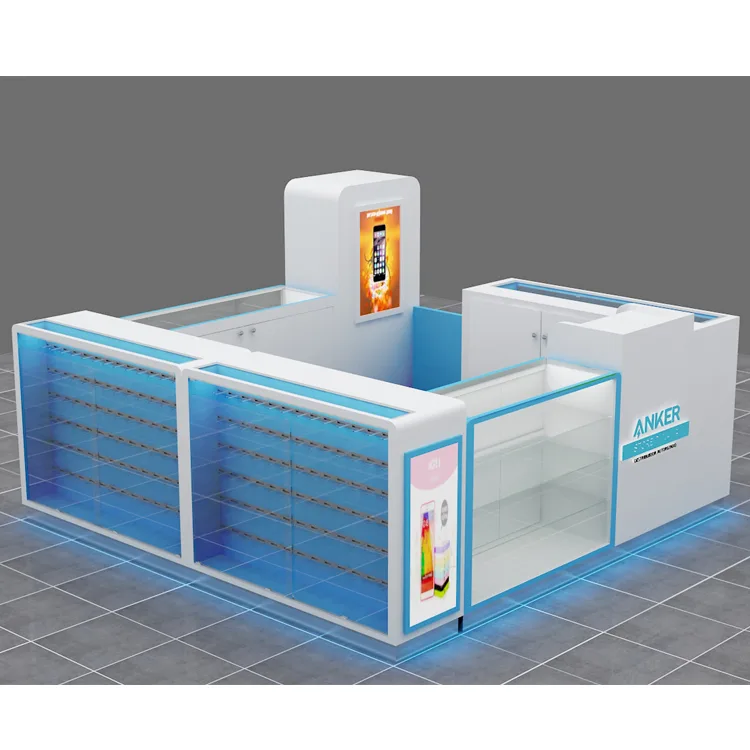
In the current era, technology is developing rapidly and consumer demands are ever – changing. Mobile phone kiosks, as a new type of retail terminal, are reshaping the way people buy mobile phones. From the external appearance to the internal structure, and from product display to functional design, every detail contains innovative concepts and humanistic care. This creates a unique shopping experience for consumers.
Appearance
- The overall design of the mobile phone kiosk combines a minimalist style with a sense of technology perfectly. The main body mainly consists of simple geometric shapes. In large electronics stores, the rectangular cuboid kiosk has a regular shape. Thus, it fits in well with the surrounding environment. In places with large open spaces and high pedestrian traffic, like airports and high – speed railway stations, the tall cylindrical kiosk has a unique shape. It stands out and attracts the attention of travelers.
- Kiosks often use pure white, deep black, or silver gray as base tones. These colors are full of a sense of technology and establish a stable and professional visual foundation. Kiosks also feature eye – catching brand – specific colors as accents. For example, Huawei’s kiosk has a silver – gray main tone. It incorporates Huawei’s unique indigo blue logo, highlighting the brand’s technological heritage and having high recognition.
- Some kiosks have LED light strips embedded at the bottom or edges. At night or in low – light environments, these light strips emit soft and tech – savvy blue or white light. The light creates a cool lighting effect, making the kiosk stand out among numerous commercial facilities.
Layout
The layout of the kiosk focuses greatly on functional zoning and operational convenience. It mainly divides into three areas: the display area, the operation and interaction area, and the storage area.
The display area is in a prominent position. A large screen plays exquisitely produced product promotional videos. These videos vividly showcase the various functions and features of the mobile phones. Real mobile phones or models are on open shelves. This allows consumers to intuitively feel the appearance design of the mobile phones. The operation and interaction area has a sensitive touch screen and operation buttons. Designers make the interface simple and clear. Consumers can easily click or slide to query detailed product parameters, price information, and complete the ordering process. The storage area is inside the kiosk in a hidden position. People use it to store spare mobile phones, accessories, and the main equipment. This maintains the clean and orderly appearance of the kiosk. All areas are reasonably planned. The consumer’s movement route is clear at a glance, greatly improving the shopping efficiency.
Display Cabinet
The display cabinet is the core component for the kiosk to showcase products. It comes in a rich variety of forms. Glass – made closed display cabinets can prevent dust and theft. Their high transparency enables them to fully display the appearance of the mobile phone. Designers carefully design the internal lighting. It illuminates the mobile phone from different angles, perfectly presenting its color and texture. Open display shelves make it convenient for consumers to get close to the mobile phone models or popular styles. Consumers can directly feel the size and weight of the products. Some high – end display cabinets have intelligent sensing functions. When consumers approach, the lights automatically turn on or product introduction videos play. This greatly enhances the interactivity and attractiveness.
Material Selection
When choosing materials, designers consider aesthetics, durability, and functionality for the kiosk. They mostly use aluminum alloy for the external frame. This metal is sturdy and corrosion – resistant. It can withstand long – term use and frequent handling. Also, it is relatively light in weight, so it is easy to install and move. Designers use a large amount of glass and acrylic materials for the display surface. Glass ensures a high – definition display effect. Acrylic’s plasticity allows people to create various special – shaped components and lighting decorations. Designers usually select wear – resistant and easy – to – clean engineering plastics or artificial stone materials for the operation countertop. This ensures a good operation experience and a long service life. They use high – quality plates for the internal structural components and match them with hardware connectors. This ensures the overall structural stability.
Conclusion
From the design to the material selection, and from the layout to the functional configuration, the mobile phone kiosk reflects great ingenuity in every aspect. It is not just a sales platform. It represents an outstanding achievement of the deep integration of technology and design. Looking ahead, as technology continues to progress and consumer demands keep upgrading, the mobile phone kiosk will surely evolve continuously. It will bring consumers a more convenient, intelligent, and personalized new shopping experience.